Redistricting FAQ – Zone 8
This Frequently Asked Questions (FAQ) document is intended to help Rotary and Rotaract members, clubs, and district leaders understand the proposed Zone 8 redistricting plans connected to the Regionalisation Pilot.
What is the Zone 8 Regionalisation Pilot?
The Zone 8 Regionalisation Pilot is an initiative designed to test a modern, regionally relevant governance structure for Rotary in Zone 8. Its purpose is to support new ways to grow Rotary, expand reach, increase impact, and strengthen support for clubs and members across the region.
Why is redistricting being considered now?
Redistricting is being considered as part of post-pilot planning and futureproofing for Rotary in Zone 8. Although redistricting was paused during the pilot, leaders recognised the need to plan not only for 2028, but also for 2038 and beyond. The goal is to avoid the need for another major redistricting process in just a few years.
What is the current district structure in Zone 8?
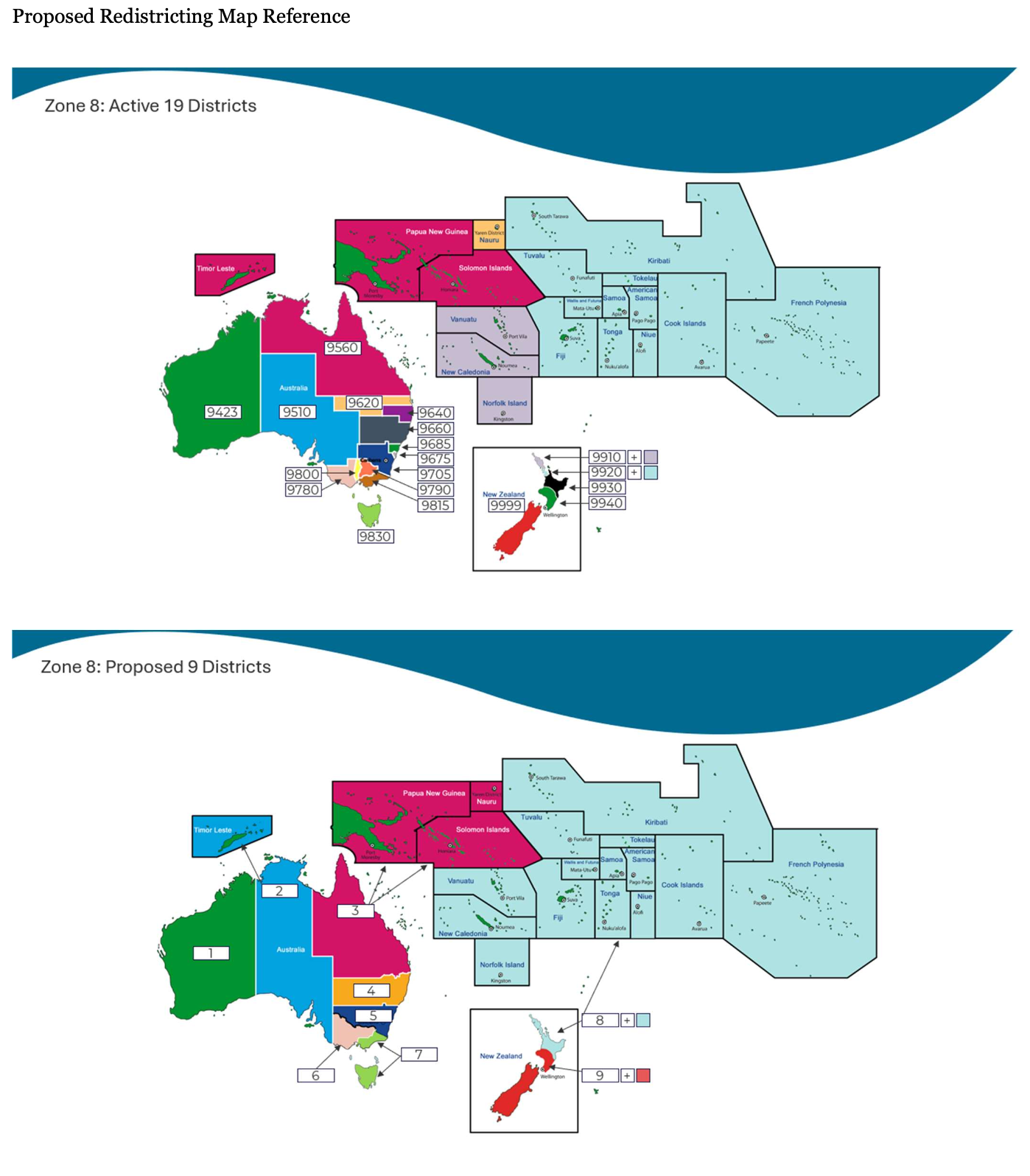
Zone 8 currently has 19 active districts, approximately 25,000 members, and 1,100 clubs across 17 countries. The zone includes roughly 45 million people and 15 languages.
What is being proposed?
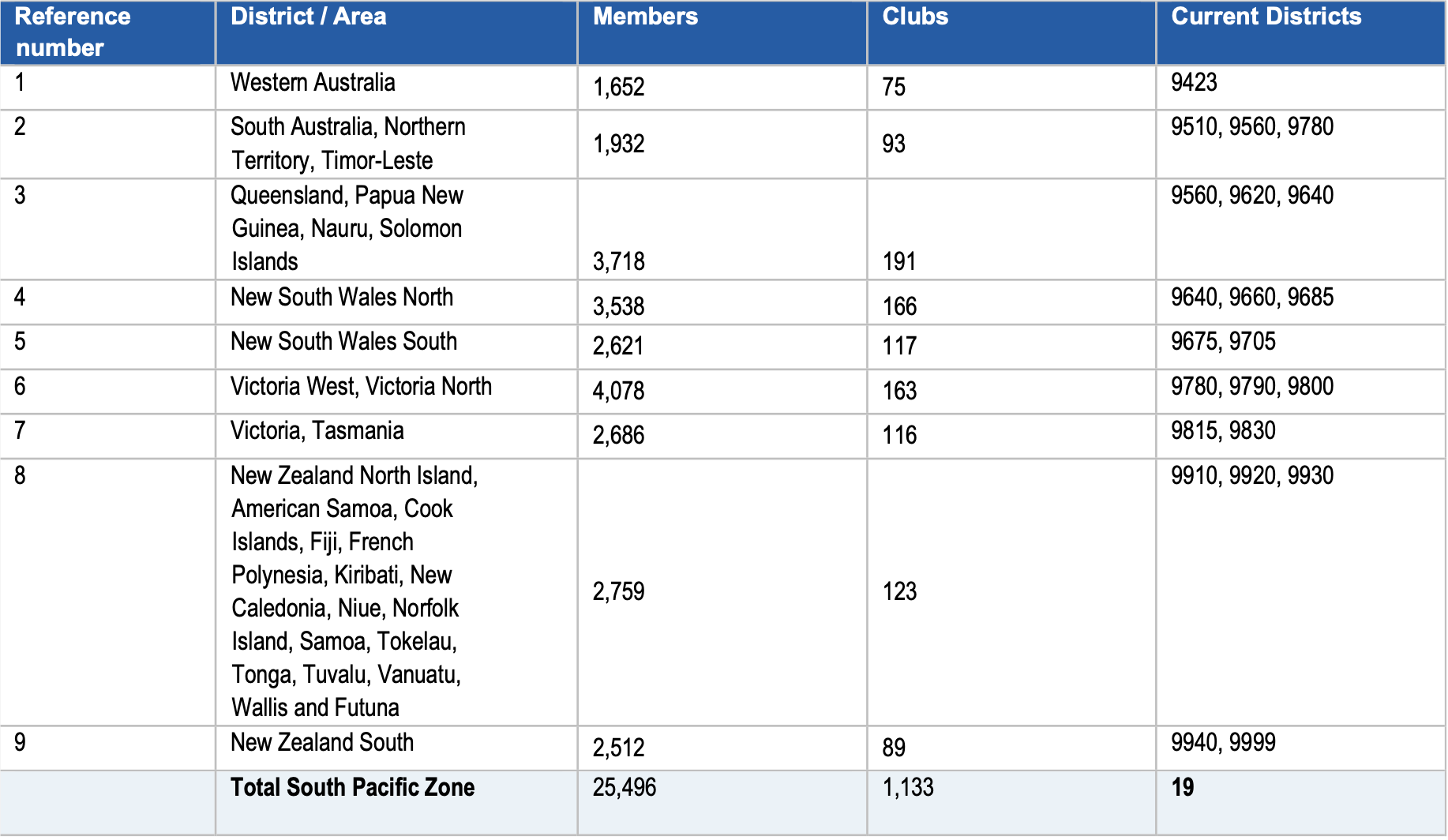
As per the June RI Board meeting, the proposal is to move from 19 districts to 9 districts, effective 1 July 2028, subject to obtaining club approval for the relevant district mergers. The proposed structure is based primarily on jurisdictional boundaries, while also considering membership balance, cultural needs, business alignment, geography, and existing relationships between districts and communities.
What are the proposed new districts?
Membership and club metrics are from July 2026 invoice figures.
Why are some proposed districts much larger geographically than others?
The proposal recognises that Zone 8 includes very different geographic realities. Some proposed districts are geographically vast but have fewer clubs and members, while others are smaller in area but have higher population density and larger membership numbers.
What principles guided the redistricting proposal?
The plan seeks to balance jurisdictional boundaries, membership numbers, cultural and regional needs, business and community connections, geography and travel realities, long-term sustainability, and stronger club support and leadership development.
Will Rotary clubs have a say?
Yes. Rotary Club voting is planned for July 2026, where required. This applies to specific district mergers involving two or more districts all with more than 1,100 members, and to situations where more than 10 clubs are moving districts based on 1 July 2026 membership metrics. As per RCP Article 17.010.5. Districting.
What are the expected benefits of moving from 19 districts to 9 districts?
The proposed move is intended to create stronger and more vibrant districts, build deeper leadership capacity, provide stronger support for clubs, and create a more sustainable governance structure for the future.
What support will be provided during the transition?
RI staff based in the South Pacific office will provide guidance on administrative requirements related to district operations and The Rotary Foundation during the 2027–2028 period. Incoming leaders are encouraged to begin building relationships within the proposed districts ahead of the 1 July 2028 activation date. The Specialist Hub will also showcase experts in various aspects of redistricting based on recent redistricting events.
What happens next?
The proposed next steps are:
• July & August 2026: Club voting for relevant district mergers.
• July & August 2026: Open District Governor Nominee selection for 2028–2029.
• October 2026: New District Governor Nominees attend GNLS.
• October 2026 onward: Begin assessing district mergers, funding, governance, and DGND elections.
• 1 July 2028: Activate the new districts.
When would the new districts officially begin?
The activation date for the new 9-district structure is 1 July 2028.
What is the overall message to members and leaders?
This redistricting proposal is described as a significant opportunity to strengthen Rotary in Zone 8, create deeper leadership, provide stronger support to clubs, and build a governance structure that is fit for the future. The presentation thanks district leaders for helping shape the process and acknowledges the bold leadership required to proceed with the plan.