

On the weekend our Club operated the Cafe Car at the Port Adelaide National Railway Museum.
Although it was relatively quiet in the Cafe Car, we did make over $800! There were about 420 through the gates each day, so we did rather well.
Interestingly, we were trying to find out what the Webb Centenary was about. We didn't find out much at the NRM, so resorted to the internet and found the following:
William Alfred Webb (1878–1936)
- brings big locos;
- modernises South Australian rail systems;
- modernises Islington workshops
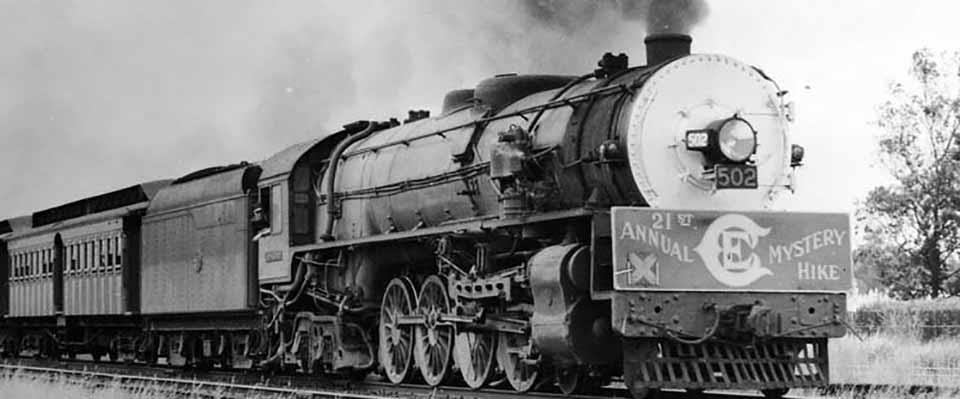
One of the big 500 class Mountain locomotives brought into South Australia by American commissioner William Webb.
Image courtesy State Library of South Australia
Image courtesy State Library of South Australia
William Webb, an American, was appointed South Australian railways commissioner by the state government in 1922. His brief to revive the system from the brink of collapse, brought in an era of big power.
In 1926, two 500 class Mountain locomotives – the strongest in Australia – were unloaded at Port Adelaide. Within 10 years, a fleet of large modern locomotives had been imported or built at the South Australian Railways’ modernised Islington Workshops.
Webb's program also included :
- larger freight vehicles;
- new and stronger bridges;
- diesel railcars;
- expansion of the Islington workshops;
- duplicated tracks and modern depots.
Converting narrow gauge lines to broad gauge began throughout the mid-north in the 1920s to carry much larger trains.
Road delivery vans and trucks, to compete with the private sector, new administrative procedures, refreshment services, train control, the South Australian Railways Institute and electric signalling were other Webb innovations.
Besides the Islington railway workshops being modernised, a large new round house was built at Mile End, near Adelaide, and several 85 foot turntable were installed throughout the state to handle much larger locomotives. An American train order system was adopted for country lines.